
The first time I read Michael Pollan
A changing zeitgeist [+ February updates]

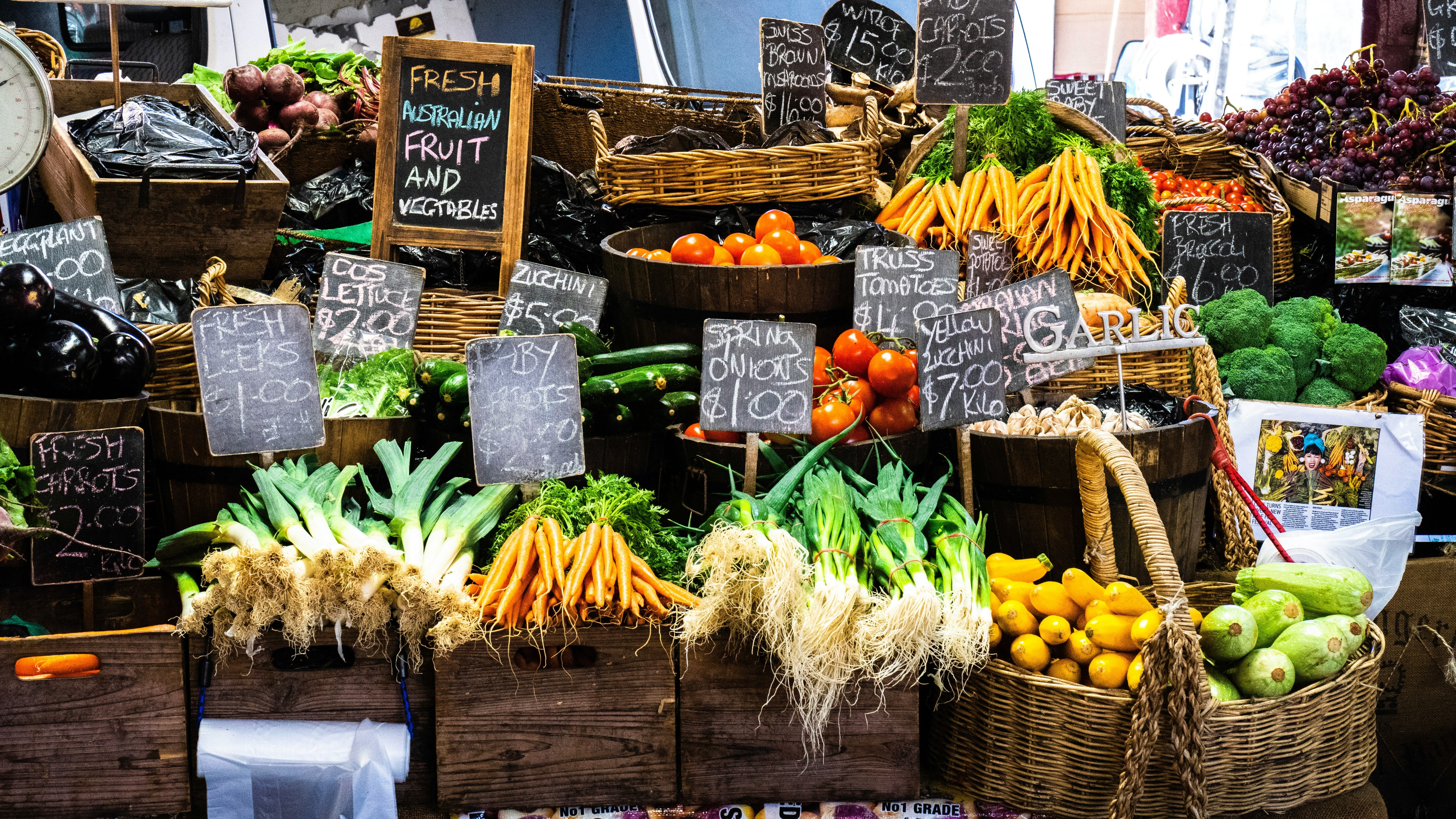
Michael Pollan’s book The Omnivore’s Dilemma was one of those reading experiences in which the experience stuck with me.
I associate the book with a particular time, and a place, too: an apartment in Allen, South Dakota, on the Pine Ridge Reservation. That’s where the friend who recommended the book lived.
I’ve written before here about my two years in South Dakota. It was the time when adulthood began for me, the first time I had to make much in the way of daily choices at all—including, importantly, what I ate. Living there in one of the most rural places in America also helped my interest in the environment bloom. So my mind was fertile terrain for a book with big ideas about how we grow our food.
I’ve been struck, lately, by rising backlash—against Pollan,1 and against Wendell Berry, his major predecessor, too. (At Southlands, we got in on that game, in fact.) Last year, Simon & Schuster published Michael Grunwald’s We Are Eating the Earth, which argues that industrial farming, is, thanks to its efficiency, a necessary climate solution.
Later this month, Basic Books will release Feed the People!: Why Industrial Food Is Good and How to Make It Even Better, whose subtitle gives you the idea of the book.
Given the book that I am working on, about meat, these felt like books I’d need to absorb and consider. So over the next few weeks, I’m going to spend some time reckoning with their ideas. So, first up, below—after the standard updates, and below the paywall—let’s talk about Pollan’s famous “food rules,” and whether they’re due for an update.
January Scenes


Upcoming events
February 24 (Ocean Springs, MS): Sea Change Live
Southlands is collaborating with WWNO’s Sea Change podcast to host a live conversation about the future of seafood in the Gulf. Come join us at the Walter Anderson Museum of Art for free oysters and live music! This is a free, ticketed event, with a reception and an after party. Be sure to subscribe to Southlands to be alerted when the tickets are released!
March 12 (Champaign, IL): Keynote, Illinois Association for Floodplain and Stormwater Management Annual Conference


Books Report
James Galvin’s The Meadow: Picked this up from the library after reading about it in the latest issue of the Sewanee Review, which is devoted entirely to Brad Watson, one of my favorite writers. Apparently Brad used to teach this book. A series of vignettes of vignettes that depict the lives of people who live in a particular meadow on the border of Colorado and Wyoming, the book astounded me. I had to buy my own copy, because there was so much I wanted to underline. Now that I’ve got it, though, I’m finding myself too harried to soak it in.
Susan Orlean’s Joyride: A Memoir: Picked this up because I’m a sucker for reading about writing—craft books, autobiographies of writers, give me it all. Figured I’d just skim it, and while I did jump over some sections, Orleans’ reflections on writing have really stuck with me. They’ve even wound up reshaping the second issue of Southlands: I decided to make a last-minute Orleans-style assignment that felt necessary for the issue.
Gabriel N. Rosenberg and Jan Dutkiewicz’s Feed the People!: Why Industrial Food Is Good and How to Make It Even Better: Well, see below…
Other Good Reading
I was discussing the book project with an editor at a magazine, and she sent me back to this intriguing Jay Caspian Kang piece in the New Yorker about what we all might learn from the politics of the animal liberation movement.
I’ve been doing some reporting—for several big projects, the details of which I hope to share soon—focused on the fact that many, many South Africans now live in the Mississippi Delta, where they serve as seasonal employees on row crop farms. That’s got me thinking a lot about what’s going on in South Africa, and what it says about our country. I’d recommend this new essay by Eve Fairbanks—about how unpleasant South Africa’s apartheid police state was even for many white people, and about how we might want to be thinking about that in America now—to anyone.
Finally, I just thought this Orion story by Jeff VanderMeer about bigfoot sightings was a study in out how to squeeze something excellent out of, literally nothing. VanderMeer makes clear he does not believe in Bigfoot—finds the idea distasteful, even—but from that absence conjures a real romp.
Rules for eating
Even if you haven’t read anything by Michael Pollan, I’d guess you’ve heard his simple “food rules”:
Eat food.
Mostly Plants.
Not too much.
His eponymous “omnivore’s dilemma” is difficult choice of what to eat in a grocery store filled with so many options. The book of that title provided, in essence, a journalistic foundation that helped readers understand the dilemma. The food rules come from a second book called, well, Food Rules. It’s high brow self-help, meant to give you an easy way to decide.
Those three simple rules are its essence. And (notwithstanding the crazed influencers trying to convince you to embrace a fully carnivore diet) (and notwithstanding our new federal dietary guidelines—more on those shortly), the general consensus is that the final two are smart. Gluttony won’t serve you long-term. And eating plants is undeniably good for your health and good for the planet’s health, too.
The trouble, though—for Gabriel Rosenberg and Jan Dutkiewicz, particularly, the co-authors of Feed the People!—is that first rule. “Eat food”?
