
Grassland memories
On adolescent landscapes

My supposedly monthly update is coming nearly halfway through this month—which is reflective of the state of things. More on that below, but first some loose scribbles from the notebook.
For a few months, late in college, I remember dreaming of moving to California—because, well, California. I saw it on TV.
I wound up instead getting a teaching job through a nonprofit that sent me off to western South Dakota.
Technically, I was living amid the Great Plains, though never once in my two years there did I identify the place that way. I grew up amid the loose spread of east coast suburbia, and I guess my high school geography lessons had not landed. I’d developed a skewed sense of the continent. The West, as I imagined it, was all mountains and deserts. The Great Plains meanwhile, were, well, a great plane, a quilt of cornfields, flat and relentless.
Perhaps it’s the fault of those ubiquitous photos of old, abandoned buildings—barns, homes, one-room schoolhouses—that were printed in my school books, the standard metonym of the plains. They left no sense of the landscape, which does not stretch but rather humps and weaves and unfurls. The Great Plains appeared in books as dead and ghostly, all but carried away by the literal winds of the Dust Bowl and the metaphorical winds of time. But the first time I drove across the Missouri River in Pierre, South Dakota, toward my new, temporary home, I found myself in a strange and turbulent landscape, so clearly alive—full of depth and mystery, a Wild West if there ever was one.
I rarely write about that place, for several reasons. One is that my time there was so brief; I taught high school math to Lakota high-schoolers. They had stories. I was just a wanderer. A few weeks ago, though, I flew to Montana for a travel story about, in part, visiting an American landscape so often left out of travel stories. Most people go to Montana for big mountains. I went for the Great Plains.
And I found I felt at home.
You might call those two South Dakota years as the beginning of my real adulthood. My college year were the most social of my life; I lived in dormitories throughout all four, and most of those on floors where most if not every room was occupied by members of my track team. At any given moment, I could wander out of my room and find a few guys gathered together, probably playing Mario Kart. For every meal, I sat at the Track Table and laughed with my forty best friends. Twenty years later, it occurs to me that the experience may have been inhibiting: I spent most of my time either training or studying; since my free time was filled automatically by these friendships, I was saved from having to figure out who I was. At the time, though, it was a raucously, endlessly joyful life. I knew, intuitively and correctly, that I would never repeat the abundance of that kind of social experience.
So I arrived in South Dakota as a 22-year-old already nostalgic for a childhood I’d just lost. (My mother drove me out, and on the way we stopped in Omaha to visit an old friend of hers who lived in a retirement home. I remember thinking about how I could not wait to age into my second chance at dormitory life.) That must have been tiresome to the new friends I met, who nonetheless embraced me; today, more so than any of my college teammates, they remain a consistent presence in my life. Looking back, though, it’s also silly, because my two years in South Dakota strike me as some of my most formative, some of my most memorable—and some of my most joyful, too.
It’d be nice to say that’s because of the work I was doing as a teacher, but more so it was the explorations I conducted with friends on weekends: backpacking trips into the Badlands, cabin weekends up in the Black Hills. I was, at once, miserable—the stress of teaching in a failed school was overwhelming—and perpetually delighted by the strange turn my life had taken. The fact that wood-paneled old saloons still operated, and I could drink in them. The sight of adolescent bison romping along a river at sunset. Almost immediately, I started wearing cowboy boots and listening to country music; my friends back east began to call me Cowboyce. The plains where I lived—that I did not think of as plains—were disheveled, wide and folded at once. The badlands were better than the endless horizon I expected the plains to offer, because who knew what hid within their next crease? And I was young enough to burn through endless weekends of wandering and beer. This wasn’t California, nor anywhere that anyone I’d known in my previous life had known, nor anywhere they were likely to seek out. That was precisely the appeal. It’s shaped the way I’ve traveled—and what I’ve written about—since.
Last month, in Montana, just before I flew home, I visited the C.M. Russell Museum. You might not know that name, but you’d recognize his paintings, or at least their style: picture the cover of an old 1940s pulp Western paperback: the great American melodrama of cowboys and “Indians.” Seeing those paintings, I finally understood why I thought, in South Dakota, that I was living not in the Great Plains but the Wild West. The Plains were, for a brief window, the place where all the iconic wildness unfurled. Or, as Richard Manning puts it in Rewilding the West, which is about Montana’s Great Plains: “the plains generated the Western myth—the swaggering cowboy, the fast-gun vigilante, the boomer who is our entire nation’s image worldwide today.”
The cowboy years here lasted less than a decade in the late nineteenth century, but thanks to painters like Russell they became seared into our national memory. As I looked at those paintings, I began to think of the place as the site of our last national adolescence. The Great Plains were, as Manning notes, the final frontier, the last place claimed by white settlers—which, against the received wisdom but also inevitably, was in the middle, away from the coastlines that were so easy to access. The country had a reckless and restless few years there; they were memorable, perhaps, but we’re fortunate that they will not repeat. Part of what had drawn me back to the plains, to write this story, was a proposal to turn much of this landscape—which is increasingly empty, because it resisted the will of us settlers—into a giant ecosystem preserve. To bring the bison back.
I hadn’t expected to think so much about South Dakota years. But I found myself considering how for me, too, the plains was a place of a final adolescence—a place where I learned a lot, had more than enough fun. But I wasn’t nostalgic. As much as I’d loved those years, there were few moments where I ever fantasized about staying.
And that’s fitting: The plains are a place of movement, always—where great ungulates range, where hunters chase them. Where American settlers tried a few ideas, and failed. Where I learned who I wanted to be. I was glad to be back, and I will be again. But I’m glad, too, to keep on traveling, becoming something new.
Updates on the life of a writer
As it happens, I’m finishing off this email as I’m flying home from an annual reunion with the South Dakota friends mentioned above. As soon as I land, I’ll be turning to the task that’s been looming for a while: I’ll start shipping out the first several hundred orders of the Southlands.
Now that the first issue is closed, I’m—belatedly—turning my attention to issue two. But also to the finances. I launched this thing without a business plan, because I just needed to see how it would live in the world. Now, though, I need to think about how to keep it alive. My rough numbers suggest I need 2,000 subscribers to break even—and that’s without paying myself. At 4,000, this becomes a decent side hustle. At 10,000, it becomes a career, a thing that sustains me. (I do plan to keep writing books and magazine stories no matter how the magazine grows.) I think it’s going to take some time to get to any of those benchmarks, and I’m very open to conversations with anyone with visions about how to partner to make it happen.
Relatedly, it’s been a good couple months as a freelancer. I have some stories in the pipeline I’m very excited about, in pretty big-name publications that are new to me. That said, in 2026 I’ll probably be looking for more opportunities for editing work, and maybe teaching. I’ll make a more formal announcement down the line but I figured I seed that in my most devoted readers here.
Upcoming events
Tues., Oct. 21 (2-3:30pm CT): Media Webinar: Covering Aquaculture with Confidence
Tues., Nov. 4 (New Orleans): Southlands Launch Party at Mosquito Supper Club—details and ticket sales coming soon!
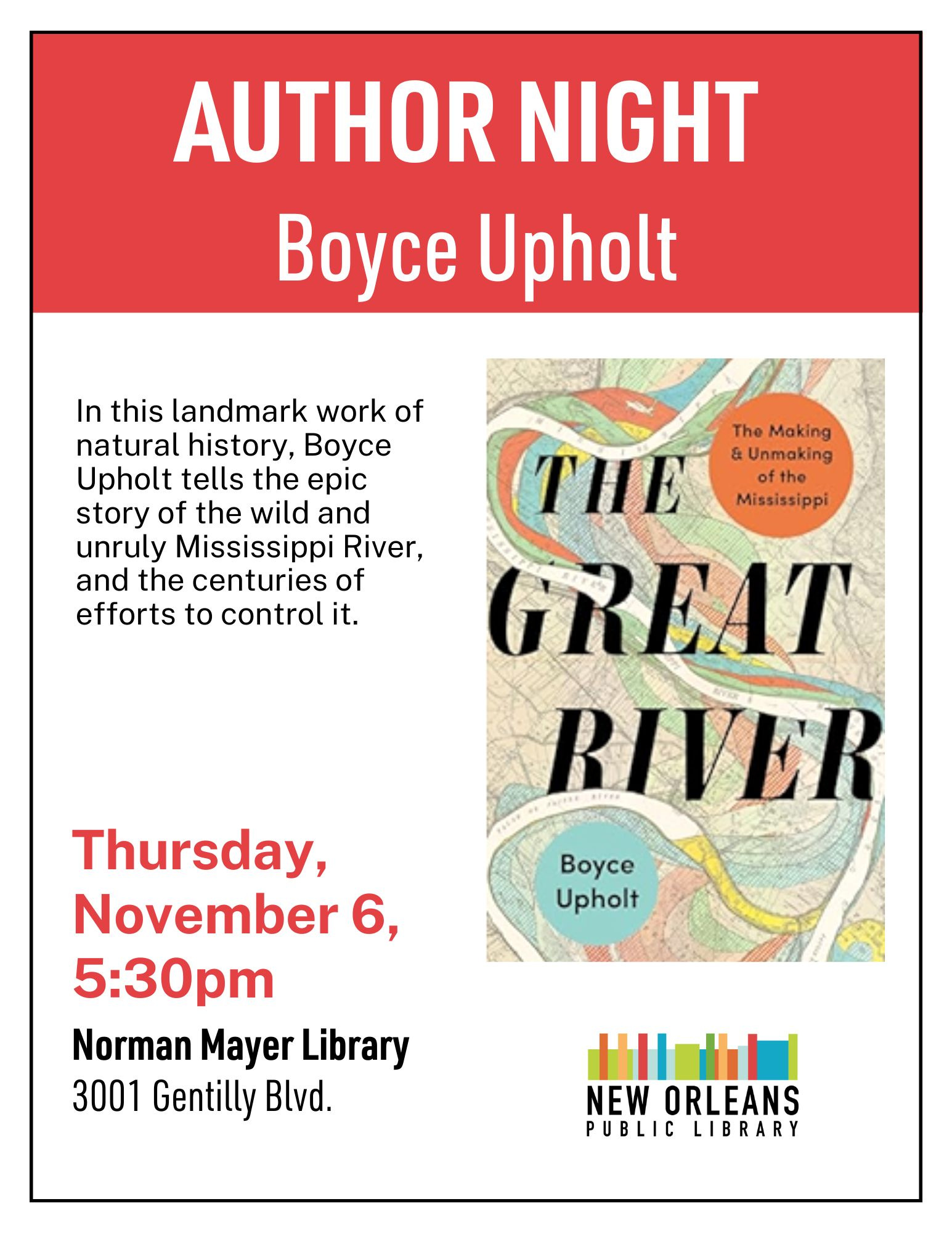
Thurs., Nov. 6 (New Orleans): Author Night at Norman Mayer Library
September Interviews
Ten Across Podcast: Negotiating Survival: The Complex Decision-Making Required to Save Louisiana’s Coast (with Beaux Jones of the Water Institute of the Gulf)
September Scenes


